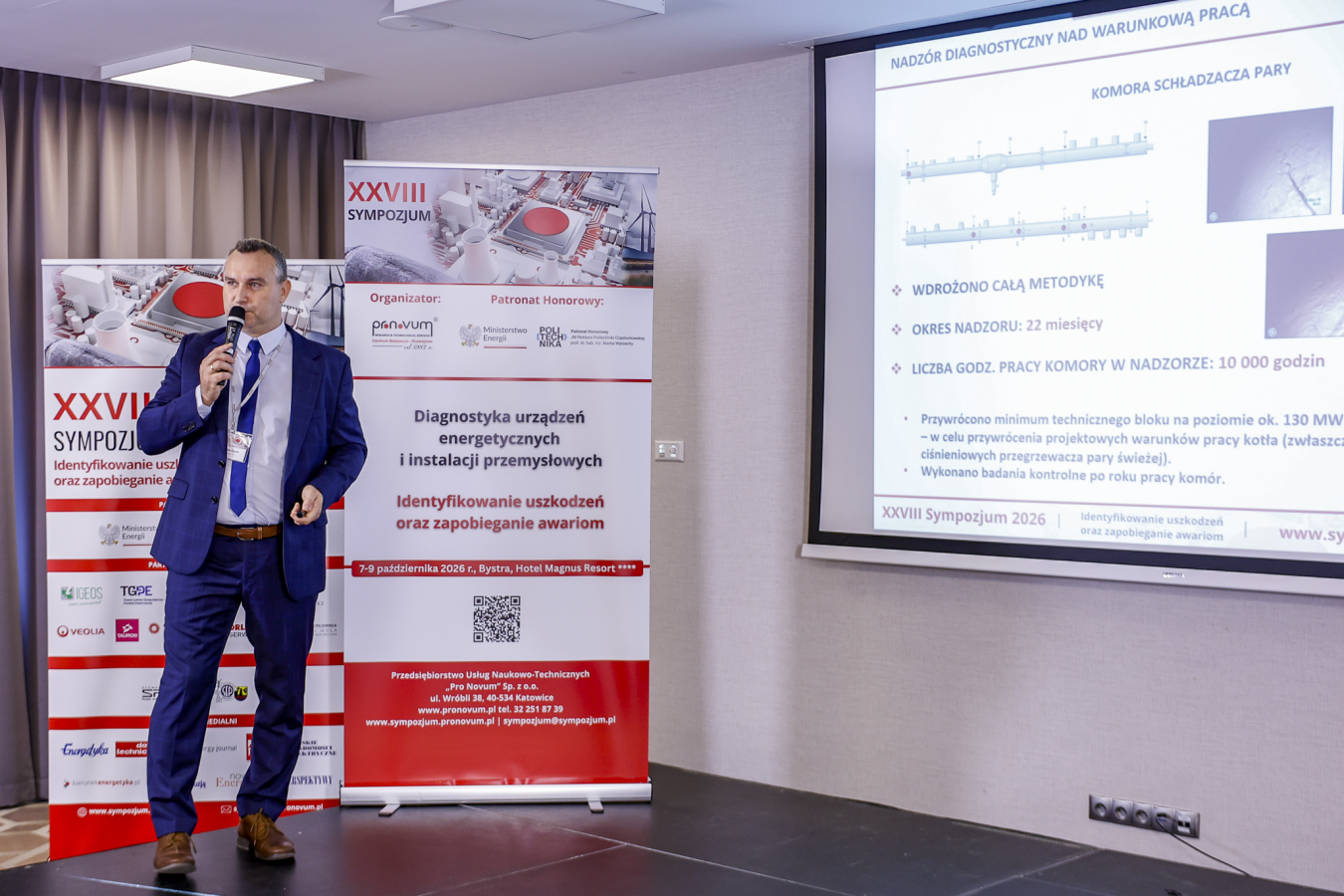


The second day of the symposium was marked by substantive presentations, the exchange of experiences, and discussions on modern solutions for technical diagnostics and failure prevention.
The first part focused on identifying the causes of damage, as well as methods for restoring equipment functionality and extending its service life. Wojciech Murzynowski from Pro Novum addressed the issue of irreparable damage. Cezary Kolan and Tomasz Bijak, also from Pro Novum, discussed the revitalization of cast-steel turbine components in the context of repairs and service-life extension. Meanwhile, Adrian Sobczyszyn from Pro Novum examined the direct and indirect causes of failures in the heating surfaces of steam boilers.
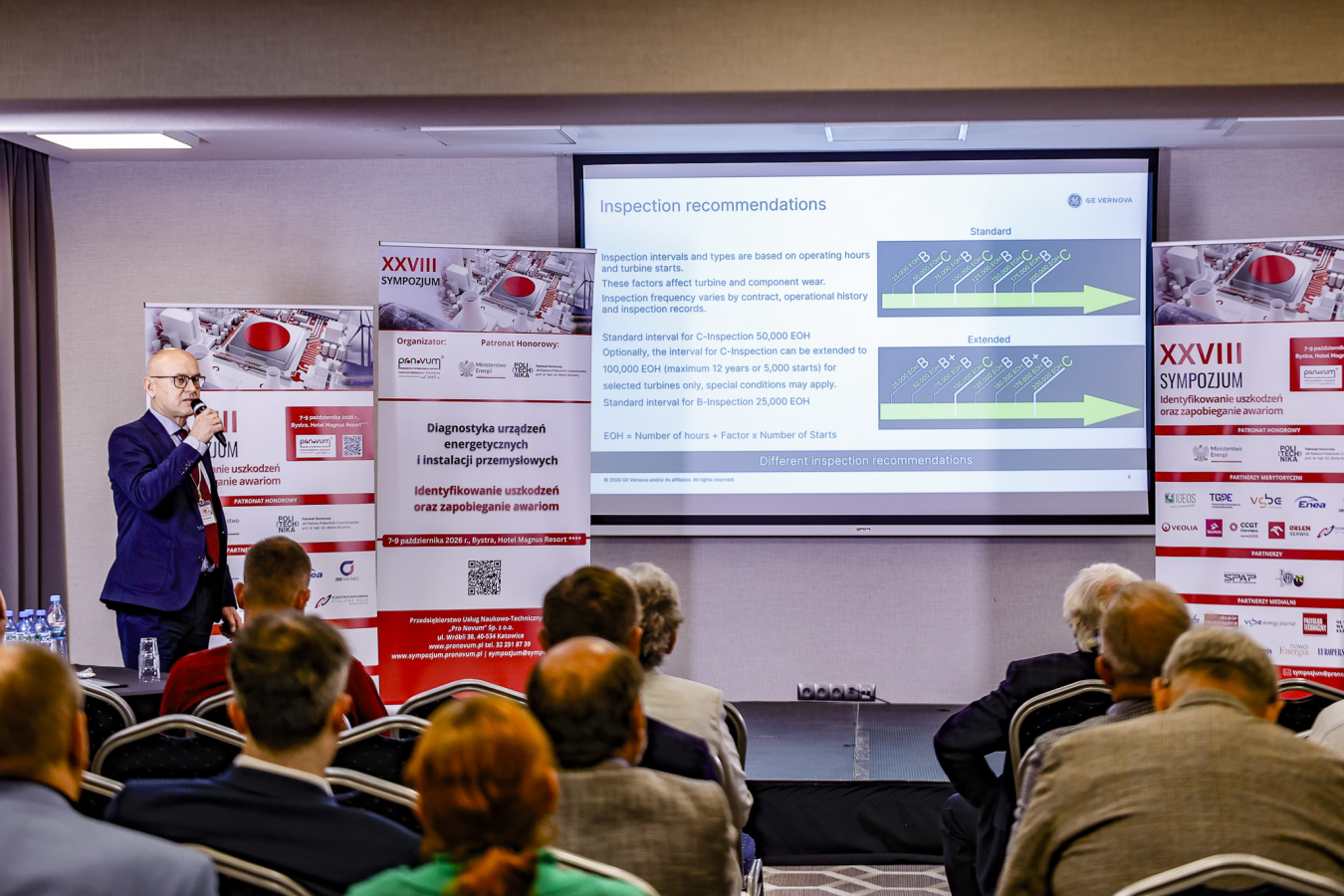
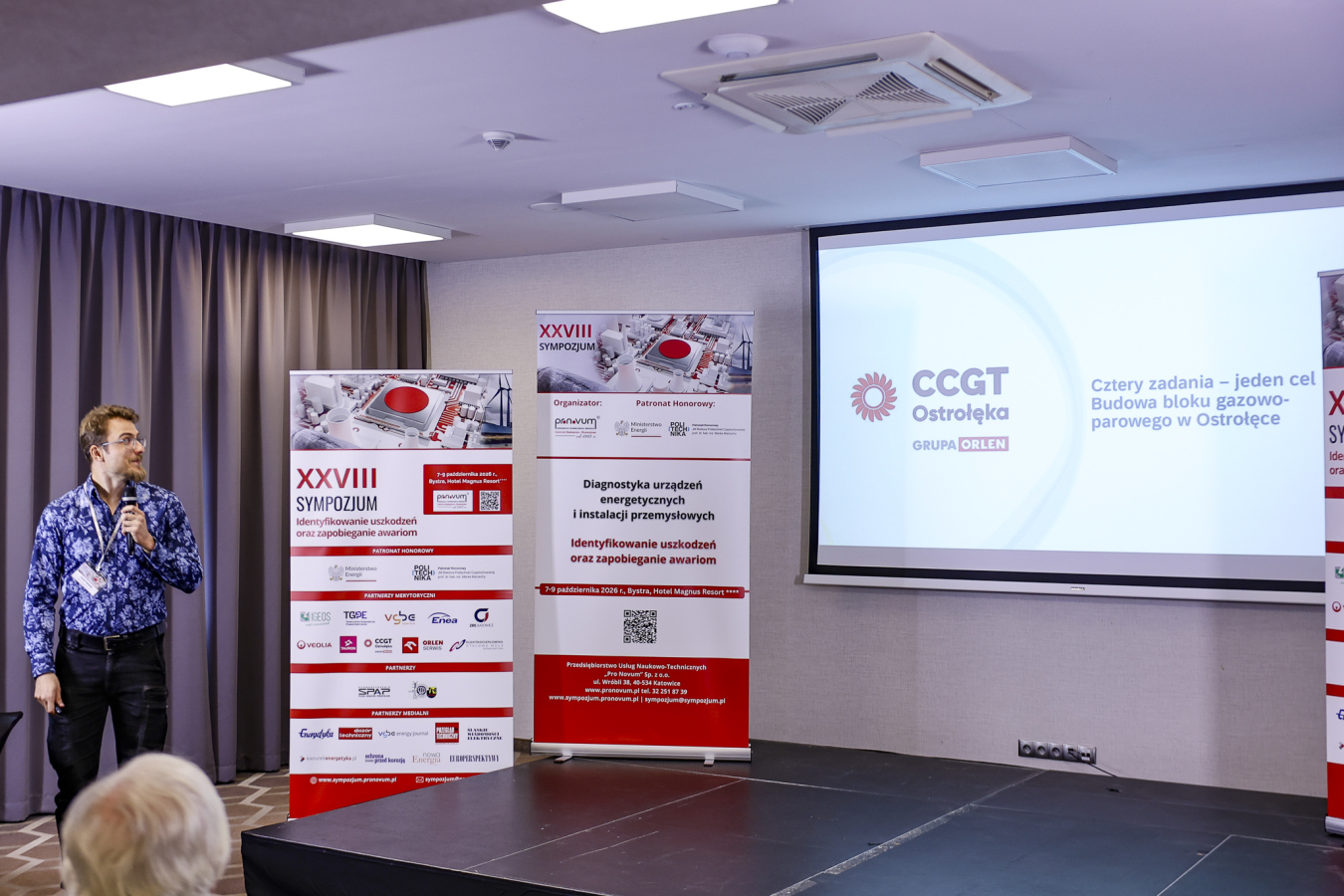
The subsequent session showcased experiences and solutions designed to assist in identifying damage and mitigating failure risks. Mariusz Banaszkiewicz from GE Vernova shared the company’s experience in identifying damage to steam turbine rotors and implementing measures to prevent failures. Patryk Puławski from CCGT Ostrołęka delivered a presentation titled "Four Tasks – One Goal," in which he discussed lessons learned from the development of the combined-cycle gas turbine (CCGT) unit in Ostrołęka. In the following presentation, Michał Rawecki from Reversesolutions explored the use of 3D technology in diagnostics, servicing, and maintenance, highlighting how modern tools can help identify risks and plan technical interventions.
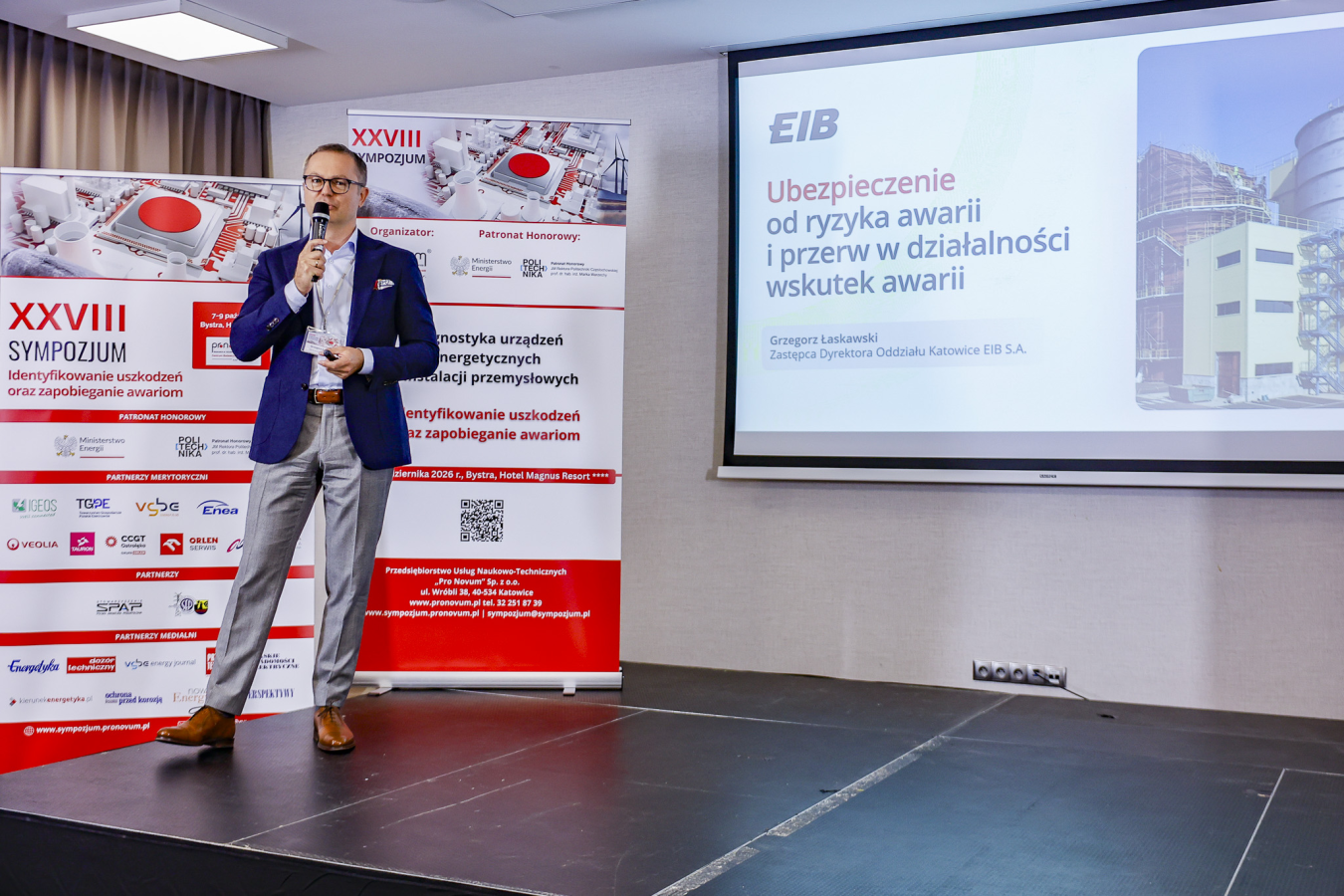
The final part of the proceedings was dedicated to various aspects of risk management and effective diagnostics. Grzegorz Łaskawski from EIB SA addressed the topic of insurance against equipment failures and the resulting business interruptions. Krzysztof Brunné, Marcin Błaszczyk, and Daniel Pieńkosz from Pro Novum discussed the detection and identification of damage, drawing on the expertise of specialists and the use of appropriate measuring equipment. In the final presentation, Paweł Gawron from Pro Novum outlined a catalog of component damage—typical for the current operating conditions of such equipment—linked to the physical and chemical environments in which they function.
The topics presented demonstrated that effective failure prevention requires a comprehensive approach: from understanding the mechanisms and root causes of damage, through the selection of appropriate diagnostic methods and repair technologies, to the consideration of technical and financial risks. A common theme across all the presentations was the pursuit of solutions designed to enhance the safety, reliability, and durability of power generation equipment.
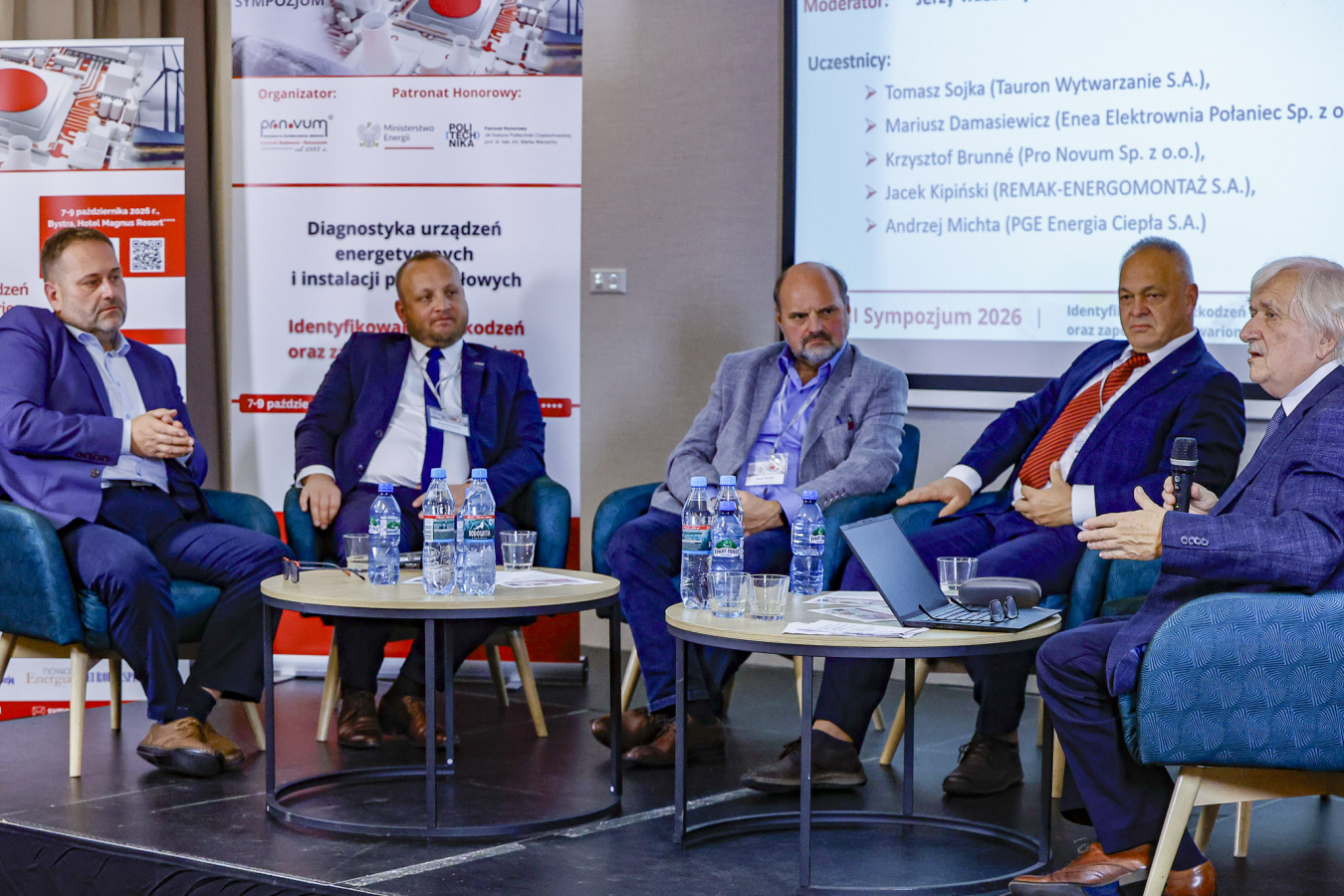
A key highlight of the day was a panel discussion titled "Diagnostics for Damage Identification and Failure Prevention," moderated by the company’s CEO, Mr. Jerzy Trzeszczyński. The session served as a forum for exchanging views and sharing experiences, focusing on the importance of effective diagnostics in detecting potential threats and mitigating the risk of equipment failure. The panelists—Tomasz Sojka (Tauron Wytwarzanie S.A.), Krzysztof Brunné (Pro Novum Sp. z o.o.), Jacek Kipiński (REMAK-ENERGOMONTAŻ S.A.), and Andrzej Michta (PGE Energia Ciepła S.A.)—discussed the challenges arising from the evolving operating conditions of power generation units. The growing share of renewable energy sources in the national power system means that conventional units are increasingly operating under variable regimes, which can impact their technical condition, durability, and availability. The discussion addressed the risks associated with such operational patterns, methods for identifying technical issues, and the critical role of maintenance teams and service providers in preventing failures. Particular attention was given to the role of diagnostics in the early detection of damage and the identification of root causes—even in cases where incidents do not formally qualify as "failures." The panel also explored the potential of remote, online diagnostics, which enable real-time monitoring of equipment status and serve as a valuable complement to traditional diagnostic methods. The symposium underscored the vital importance of collaboration between the scientific community and industry, the development of advanced diagnostic methods, and the sharing of knowledge in the pursuit of enhancing the safety and reliability of equipment in operation.
We would like to thank all the speakers, participants, and those involved in organizing the event for their inspiring presentations and active engagement in the discussions.